Lockwood-Hiller Pulsejet Simulation
What is a Pulsejet?
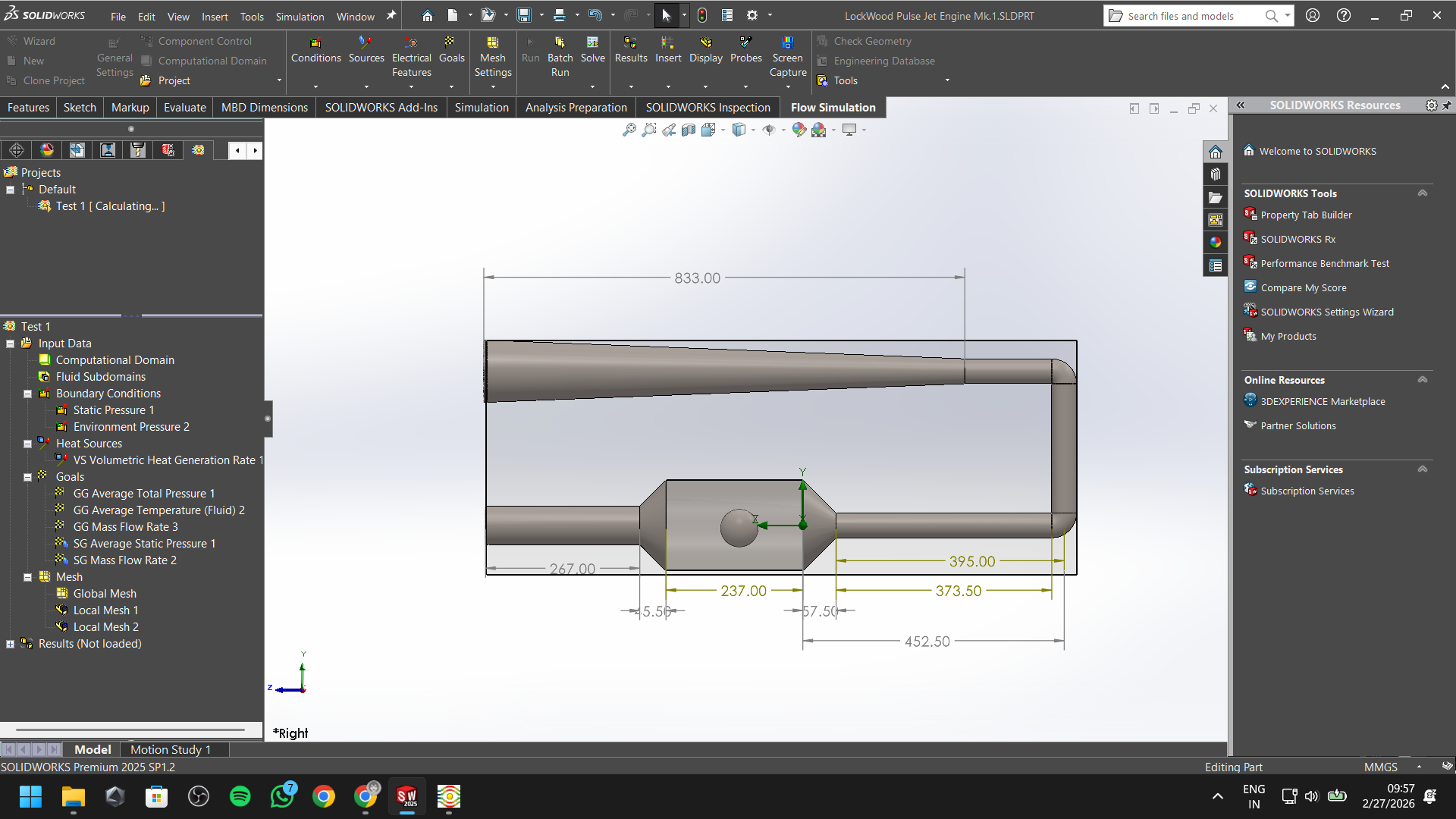
A pulsejet engine is a form of jet propulsion in which combustion occurs in high-frequency pulses rather than a continuous flow. The Lockwood-Hiller configuration is particularly unique: it is valveless, meaning it has no moving parts. It relies entirely on its geometric shape and acoustic resonance to "breathe"—creating a self-sustaining cycle of intake, compression, and exhaust.
Converting this from a static CAD model into a working transient simulation required balancing complex compressible flow physics with high-frequency timing. Every curve in the pipe acts as a "tuning fork" for the combustion cycle.
Technical Insights
Transient Timing
To capture the 200Hz+ frequency, I used a manual time step allowing the solver to track pressure waves moving at the speed of sound.
Ignition Approximation
Modeled using a Volumetric Heat Source to create the Power Stroke (expansion) and Suction Phase (contraction) required for the cycle.
Acoustic Tuning
Captured high-pressure zones reflecting off the exhaust, creating a vacuum in the chamber to suck in the next charge of air.
Solving Instability
Utilized a multi-level localized mesh to capture high-velocity gradients near the ignition zone without overloading the CPU.
Simulation Data & Post-Processing
Total Physical Time: 0.1 seconds (Capturing roughly 10-15 full cycles). I successfully observed the "vortex crossing" at the exhaust—a classic indicator of the pulsejet's unique reverse-flow breathing cycle.
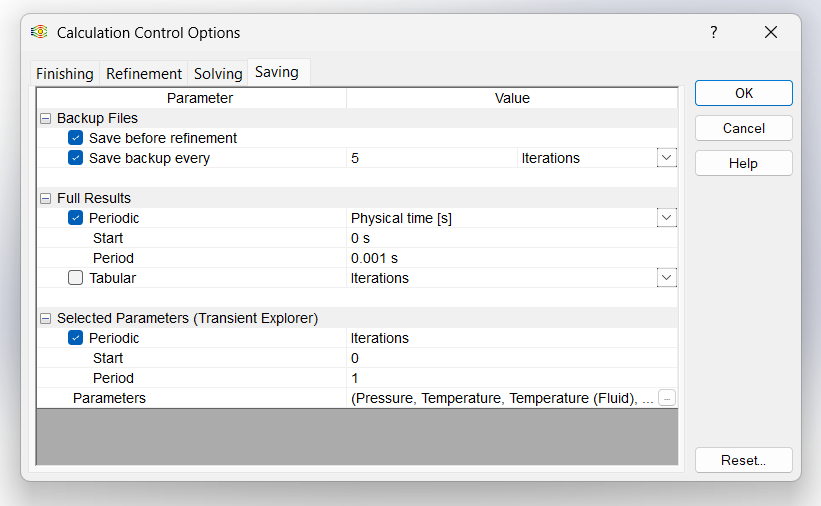
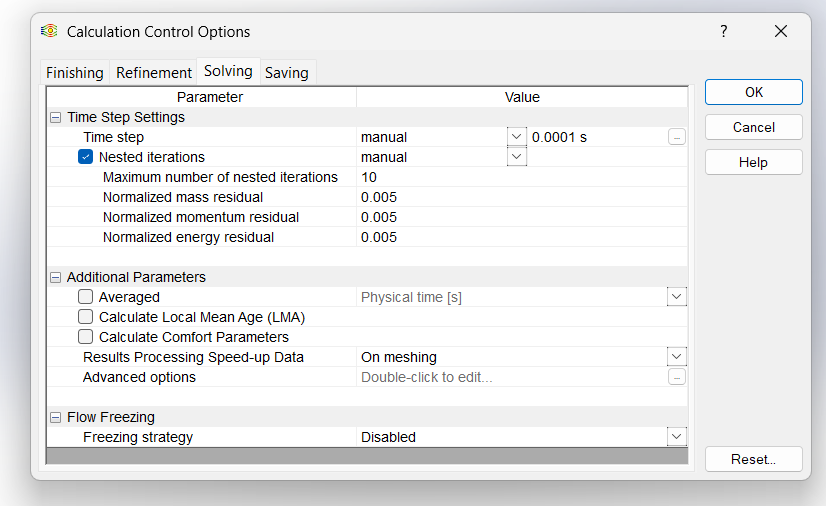
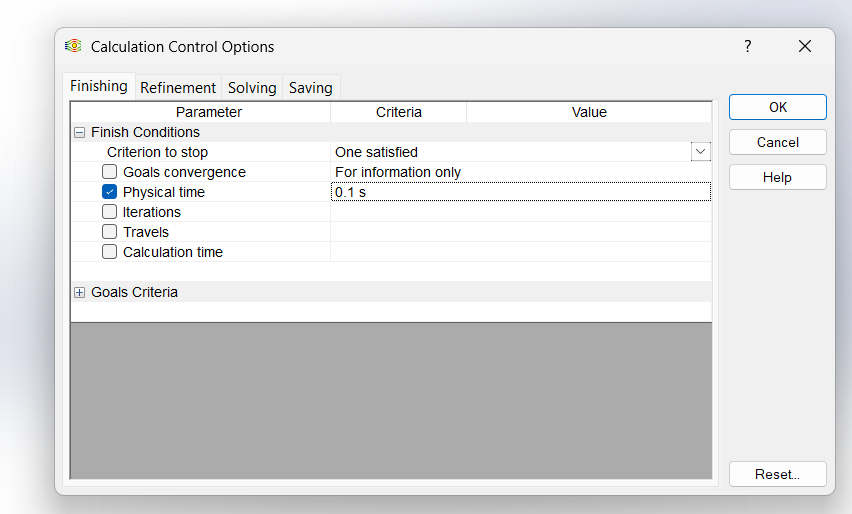
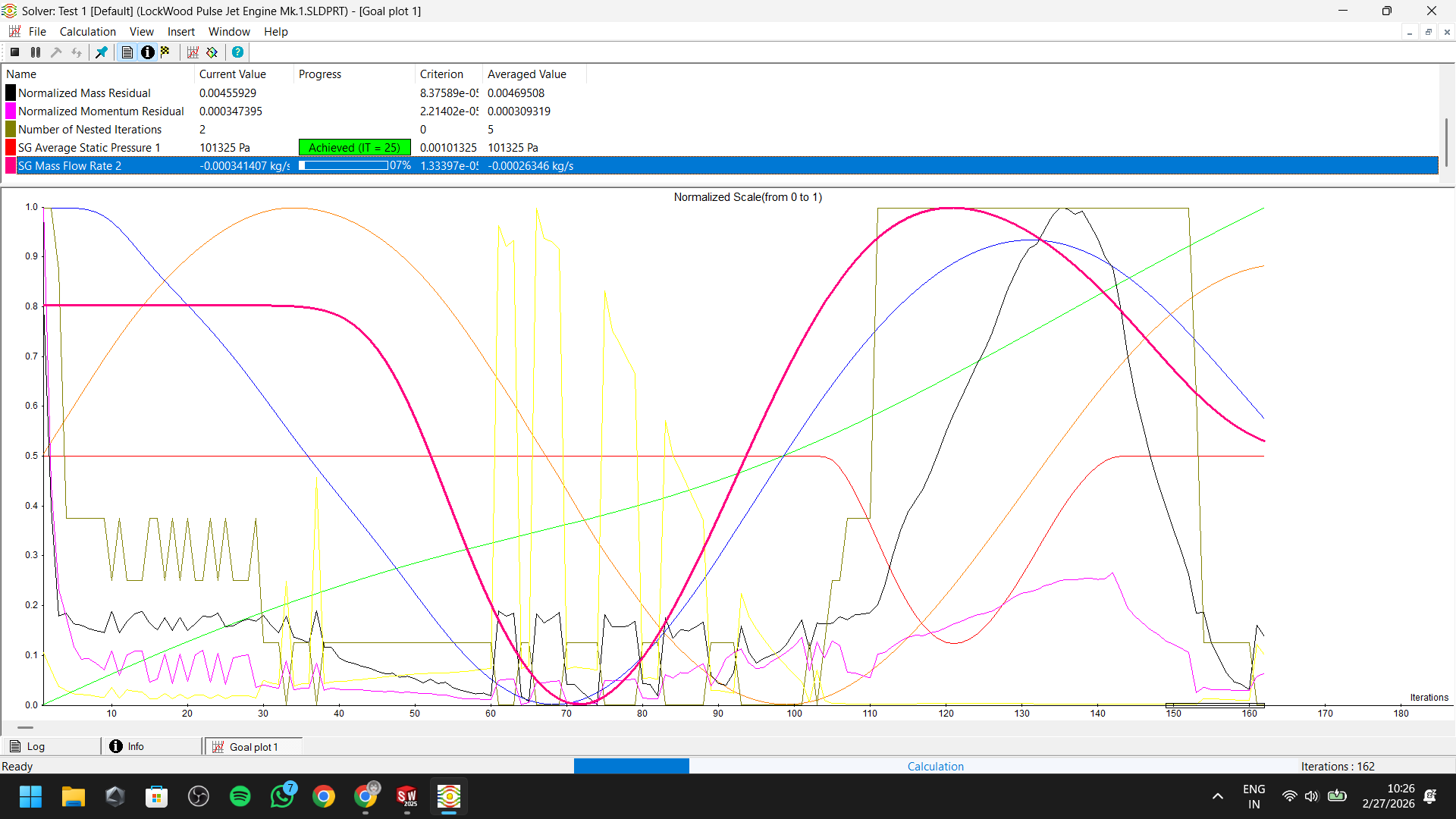
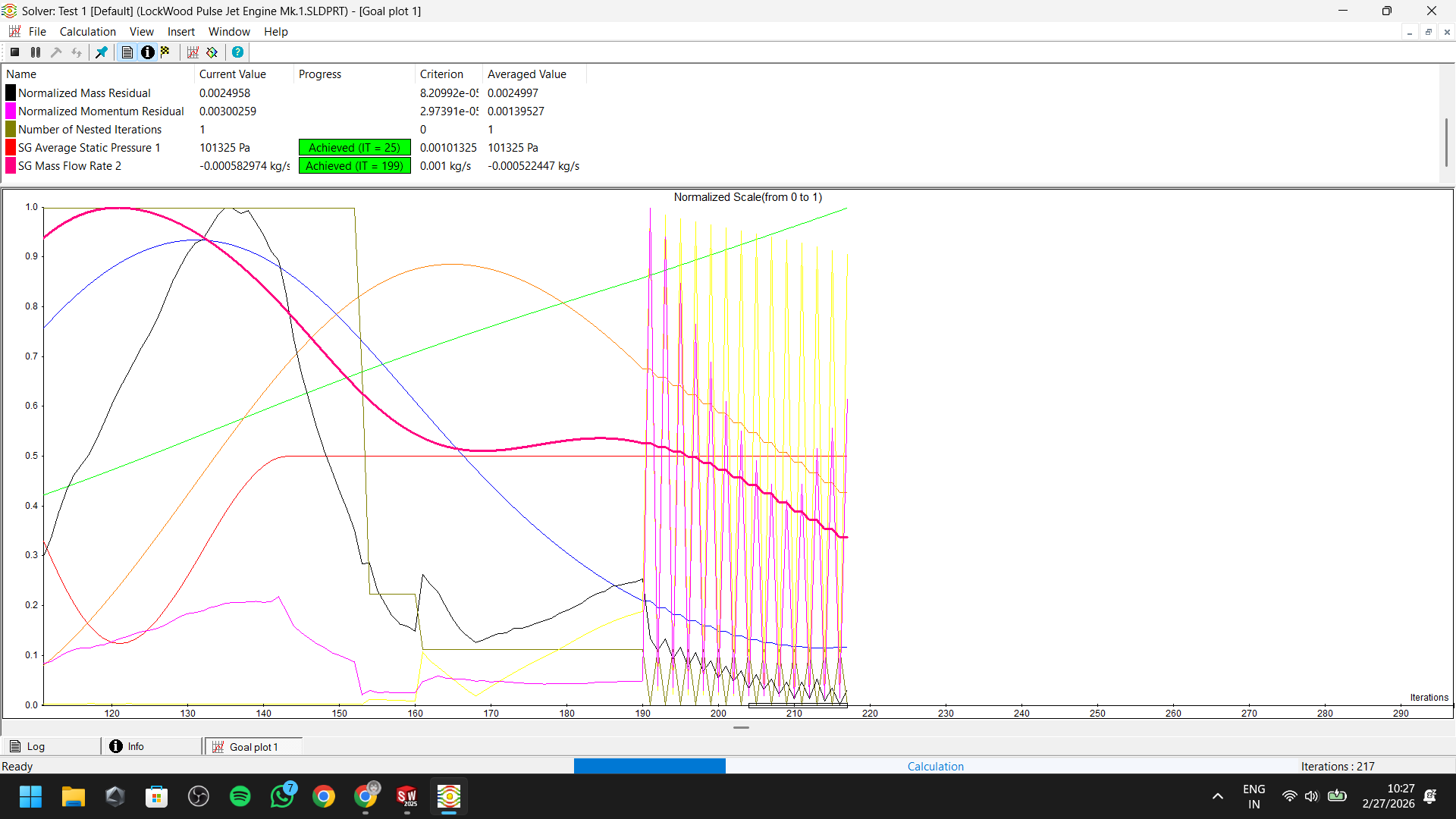
Solver Configurations
Finish Conditions
Physical Time: 0.1 s
Status: Achieved
Convergence Criteria
Mass Residual: 0.005
Energy Residual: 0.005
Goal Achievement
Static Pressure (IT=25)
Mass Flow (IT=199)